Philippe & Cherie Melka
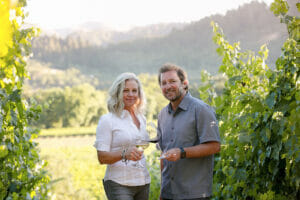
The perfect partnership of passion and knowledge. Like the celebrated wines on which he’s built his reputation, Philippe Melka’s career has been influenced by soil. His first position out of school was at Château Haut Brion, while Cherie ran the laboratory at Ridge Vineyards as the enologist, working under the direction of legendary winemaker Paul Draper. The laundry list of wineries they have worked with and consulted for is a who’s-who of legends.
As they enter the UK market, we had the chance to interview them. You can enjoy the full video below. Alternatively, read a quick snapshot of their responses below.
As the Melka stable of wines launches into the U.K., can you introduce the U.K. trade to Melka – what would you like them to remember about your wines?
Cherie: Well, I think, you know, if we had to sum it up in one sentence, it would be that we’re a family run, small producer, high end limited production focusing on quality more than quantity and terroir driven wines.
Philippe: Absolutely. And I think the important part to know is we’ve been around since 1996, so our first vintage was then. So, we are not the new kids, I will say we’ve been doing this for a long, long time. As a company, we grow very slowly. We wanted to keep it super small.
Outside of your home market, where is your most important export market, and where else would you like to see your wines?
Cherie: I would have to say we’ve been working with Japan, and we’ve done three different market visits which have been very wonderful experiences because they truly are focused on the high end and any kind of retail markets that you are in or restaurants have been just in love with our wine. So that’s been very, very fabulous to hear that kind of feedback.
Philippe: Yeah, I think, you know, we feel like overall, the growing market for us come from two sides in a way. Asia was a big part of it because Napa Valley is competing with Bordeaux in general. Then on the other side, Europe is becoming more focused on small, high-end family wineries like we are.
When you founded Melka, what were your ambitions and your expectations?
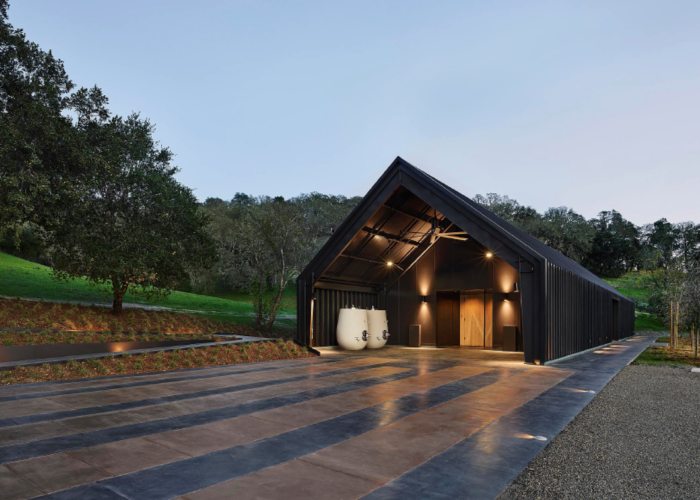
Cherie: When we first started, we were both working for different companies and when we wanted to break into the wine industry with our own brand, it’s really difficult to do if you don’t have deep pockets, right? I mean, we didn’t have the means to be purchasing land and managing vineyards, etc. so we got very creative on how we started our brand, which was initially doing a kind of barter for consulting winemaking services in exchange for fruit or finished wine. And that’s kind of how we broke into it in 1996. Growth in a way where we’re able to manage and maintain the quality that we really are focused on from the beginning. I think that’s pretty evidenced by the fact that we weren’t even able to have our own winery until twenty seventeen. On our 20th vintage, we finally ended up with our own home for our wine.
Philippe: The first study in Napa Valley was to really try to understand the quality of the different sites and basically the microclimate and trying to figure out if we could really make what we call those high-end wines with the pedigree of the ones who can age. And so initially, our goals were really to focus on what we call vineyard-designated wine or wine from one location. The criticism of Napa Valley at the beginning was really people were blending different applications, we wanted to go 180 degrees away from that and really show a site and tell the story of one place. That’s how we started.
Are there any new projects that you are working on just now that you can share?
Cherie: We’re always on the lookout for vineyards that really excite us. I mean, we already have nine different wines, so we’re not trying to kind of blow-up there and do a bunch of different wines just for the sake of doing different wines. So there has to be some type of project that really excites us. We do have some vineyards down in Paso Robles that we make Syrah from, and we are exploring a little bit of chardonnay from Santa Barbara right now. First-year trial this year, so we’ll see. We’re always on the lookout for potential new vineyards or new projects that are just going to be something in our wheelhouse that we’ve always wanted to make wine.
Philippe: Yes, high elevation, the concept of really high elevation, which is about twenty-five hundred feet, so maybe about 700- 800 meters kind of range. We wanted to take advantage of this kind of location that we can find around it and create more of a Cabernet Franc Merlot-driven wine. We wanted to also show that Sauvignon Blanc is becoming a really strong player in Napa.
Napa is well established as a respected global wine region, how do you think Napa has gotten to this point?
Cherie: Comparatively speaking, I think people have realized that Napa is a value compared to other regions in the world.
Philippe: To keep it simple: Napa Valley has been basically a little bit, you know, the bad child of the Cabernet. Now people just realize that that’s Napa is not only about jammy and high alcohol, but there’s also something else to that. And there’s a lot of wines which are very different from each other. That was also another maybe small criticism of Napa: all the wines taste the same. And well, what I can tell you is that they are not, they’re definitely very different.
Are there any new entrants you’ve seen coming into the market in your consulting work that you know you will be keeping an eye on over the next five?
Philippe: The smaller businesses are the very important ones in Napa Valley because they really trying to truly show diversity and focus on quality, basically no matter what. And then you have the younger generations with smaller businesses as well
Cherie: It’s the second generation as well. Some long-term families here have been making wine, and now it’s the next generation that’s taking over. And again, they may not necessarily be following the same philosophy that the first generation had employed for the winemaking. That’s what’s really innovative about California. We’re willing to take risks. The new generation and next-generation are taking risks and doing some different approaches to winemaking.
Are you seeing a trend that particularly speaks to you that you will be keeping an eye on for the coming years?
Cherie: The main focus is obviously on farming and the fact that there is this climatic change, and we really need to address it starting in the vineyard. So even this year, we had a vineyard, our reservoir was empty, and we ended up trucking water from our well here at the estate to the vineyard. So, you know, those are situations that nobody really likes to be faced with, but we need to address them head-on. Otherwise, it’s going to become even a bigger issue down the road. Addressing global warming and making sure that there are farming techniques that we can use that will produce a drought-resistant type of vineyard where there’s minimal intervention.
Philippe: We went to the extreme in California with basically a trend of very opulent wine that was kind of really the focus. And we were really focusing on what we call the richness of the fruit and showing the climate more than really showing the soil and the terroir. The wines are a little bit more refined and elegant, we wanted to bring a little bit more integrated tannins and this kind of really beautiful fruit profile and the purity of the fruit that we can get also up here. That was really the key of, I think of the success until now and probably going forward.
Can you give us a summary of how the 2021 harvest went?
Philippe: Yes, it was great. It was drama-free. We didn’t have any stress after the 2020 fires. That was really, really great to see. The drought was what affected the harvest to trigger it so early on. A beautiful flow of harvest. We started, in early September and finished early in October. It’s very impressive, it’s going to be very successful, unfortunately, probably with a lower yield, so less wine than we usually do.
Cherie: After a zero harvest in 2020, typically we harvest around seventy to seventy-five tonnes, and we did about 60 this year. So, a little bit lighter than normal, but the quality is great. We are very, very happy.
And to finish, what is the one wine you have tasted that you wish you had made?
Philippe: I have to pick two: Palmer 1970, which I had at a lunch about a year ago and I couldn’t understand why the wine was so beautiful, it was unbelievable. And we have always been a great fan of the Graves in Bordeaux because they really show blending expertise, of some of those people there with Cabernet Sauvignon, Cabernet Franc, and Merlot. Haut-Brion 1986 has always been kind of my cup of tea. When I worked there, I fell in love with the wines and the perfume.